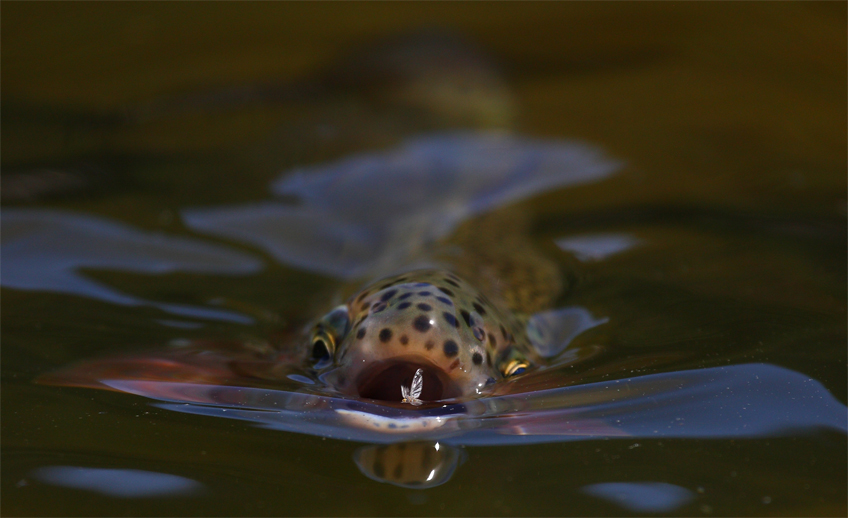
The Missing Link is one of the best all-around low-water searching patterns you can tie on. Its trailing antron shuck and realistic profile give it the look of a natural still struggling out of its shuck, which is exactly the stage that gets eaten most confidently when fish have a long, unhurried look at your fly. It reads as a caddis, a small stonefly, or even a general mayfly depending on color and size, which makes it a great choice when you’re seeing sporadic rises but can’t pin down a specific hatch. Carry it in tan and olive, sizes 14 to 18, and use it as your first fly when working a piece of low, clear water blind.
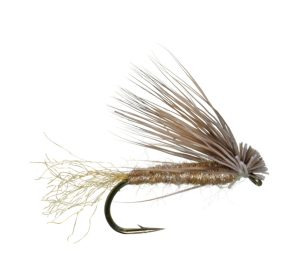
Caddis hatch on Colorado rivers all summer long, and in low water a low-riding emerger pattern like the X-Caddis will consistently draw more confident eats than a bushier, high-floating caddis dry. The trailing shuck sits flush in the surface film, matching a caddis that’s still partway out of its pupal case — a much easier target for a wary trout than a fully emerged adult skating across the water. Downsize as flows keep dropping; a size 16 or 18 in tan or olive is a dependable choice for evening caddis activity through July and August.
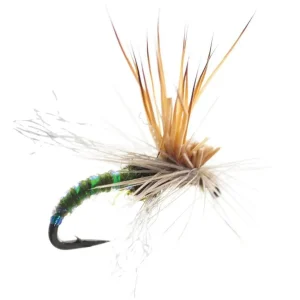
Pale Morning Duns remain one of the most reliable hatches on Colorado’s freestones and tailwaters through midsummer, and the Parachute PMD’s horizontal hackle keeps the fly sitting low and clean on the surface, exactly what selective fish want to see in slow, gin-clear water. The parachute post also makes it far easier to track at a distance, which matters once you’re fishing longer, more delicate leaders to compensate for low flows. Fish it dead drift during the mid-morning PMD window in sizes 16 to 18, and expect refusals if your leader or drift isn’t clean.
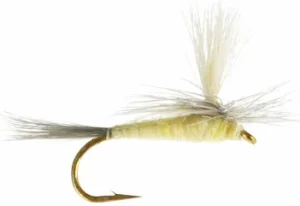
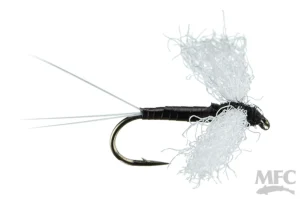
Trico spinner falls are a signature low-water event on Colorado’s technical water, typically showing up in the cooler morning hours once summer really sets in. When thousands of tiny mayflies fall spent onto the surface at once, trout key in tight on size and profile, so a properly proportioned Trico spinner in size 20 to 24 is often the only fly that will draw a take. Fish it on a long, fine leader with a drag-free drift in the softer current seams where naturals collect, and be ready for the window to close quickly once the spinner fall wraps up.
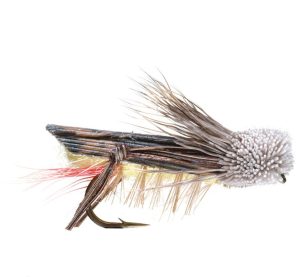
By late July, grasshoppers become one of the most important food sources on low, clear Colorado water, and Dave’s Hopper remains a proven, buoyant imitation that fish still eat with confidence. Low water pushes grass right up to the water’s edge and makes hoppers an easy, high-calorie target once they land, so working this fly tight against grassy banks and undercuts is often the most productive water you can fish in the heat of the day. Try it size 8 to 12, either fished solo or as the top fly in a hopper-dropper rig trailing a small nymph beneath it.