Beat the Heat: Tactics for Stillwater and Warmwater fishing this Summer

Beat the Heat: Tactics for Stillwater and Warmwater fishing this Summer

By late July, the freestones are running low, clear, and warm, and the trout know it. That doesn’t mean the fishing has to slow down — it just means it’s time to change zip codes. Some of the best action all summer happens away from the rivers, out on Colorado’s lakes, reservoirs, and warmwater fisheries. Stillwater trout feed all day long in the cooler depths, and bass, carp, and pike are just hitting their stride. Here’s how we approach both this time of year, and the flies we’re tying on.

2026 Might Be the Best Season to Get Your Stillwater Game Dialed. Make The Best Of The Low Water

This isn’t a normal summer on Colorado’s rivers. The 2025–26 winter produced the lowest mountain snowpack on record statewide, and it melted out roughly a month ahead of schedule after a record-warm March. Runoff peaked early, and the Natural Resources Conservation Service has projected early-summer streamflows across the state’s major basins at only around a quarter of normal, with some Western Slope drainages even lower than that. Nearly the entire state has been sitting in drought, and reservoir storage is below normal heading into peak summer.

Practically speaking, that means the rivers are going to hit their stressful low-flow, high-temperature window earlier and harder than usual this year, and voluntary and mandatory fishing closures on trout water are likely to come sooner and cover more stretches. It’s shaping up to be one of those years where leaning on stillwater and warmwater fisheries isn’t just a nice change of pace — it’s genuinely the best and most responsible way to keep a bend in your rod through July and August while giving stressed river trout the space they need.

In a normal year, river flows drop and water temperatures climb through midsummer, which stresses trout and can trigger voluntary closures once afternoon temperatures push past 70 degrees. In a year like this one, we can plan on those closures being earlier and more widespread. Lakes and reservoirs don’t have that problem in the same way — deeper water holds a thermocline that keeps trout comfortable well below the surface, and warmwater species like bass and carp are built for exactly these conditions. Fishing stillwater and warmwater in July and August isn’t a consolation prize; it’s often the smarter move in any year, and this summer it may be the best option on the table.
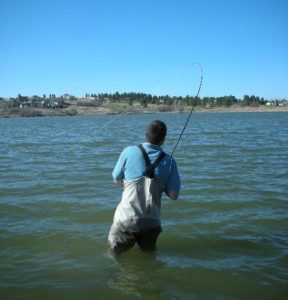
Stillwater Trout: Slow Down and Fish the Column

Lake fishing rewards patience over speed. Instead of covering water like you would on a river, the goal is to find the depth fish are holding at and put your fly in front of them repeatedly.

Techniques that work in July and August:

  • Chironomid fishing at dawn. Midges hatch out of stillwater all summer, and the bite is best in the cool early morning hours before the sun gets high. Suspend a chironomid pattern under an indicator, set to just above the depth you’re marking fish or weed tops, and let it sit nearly motionless. A slow figure-eight retrieve or an occasional twitch is usually all the movement you need.
  • Damsel and dragonfly nymph migrations. As the water warms through the morning, damselfly nymphs swim from deep water toward shore and vegetation to hatch. Cast along weed lines and drop-offs and use a slow, steady hand-twist or short strips to imitate that swimming motion.
  • Leeches and streamers for searching water. When you don’t know where fish are holding, a leech pattern or Woolly Bugger on an intermediate sinking line is the best way to cover ground. Vary your retrieve speed until you find what triggers a take, then repeat it.
  • Callibaetis hatches on calm mornings and evenings. Watch for cruising trout sipping mayflies off the surface, especially on overcast or still days. Cast well ahead of a cruising fish’s path rather than directly at it.
  • Beat the heat with your schedule, not just your flies. The best stillwater windows in July and August are early morning and the last two hours before dark, when light is low and fish push shallower to feed.

Top fly patterns for Colorado stillwater right now:
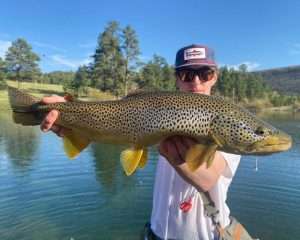
  • Chironomid pupa patterns in black, red, and olive, sizes 14–18
  • Damsel nymphs in olive, sizes 10–14
  • Callibaetis nymphs and Parachute Callibaetis or Sparkle Dun dries, sizes 14–16
  • Scuds in olive and orange, sizes 12–16
  • Woolly Buggers and mohair leeches in black, olive, and brown, sizes 8–12
  • Small beadhead attractors like a Prince Nymph or Hare’s Ear as a searching dropper


Warmwater: Bass, Carp, and Pike Step Up

While trout are dealing with summer heat, bass, carp, and pike are firing on all cylinders. Colorado’s warmwater fisheries — found in lower-elevation reservoirs and slower river stretches — offer a completely different style of fly fishing built around sight fishing, structure, and aggressive strikes.

Species and techniques for July and August:

  • Smallmouth and largemouth bass. Fish shift deeper during the heat of the day, holding near rocky points, weed edges, and submerged timber, then move shallow again in low light. Early and late in the day, work topwater poppers and deer hair bugs along the bank for explosive strikes. Midday, switch to a sinking line and strip crayfish or baitfish patterns along structure.
  • Carp. This is sight fishing at its best. Look for carp tailing or cruising skinny mud flats on calm mornings before the wind picks up. Lead the fish, let the fly sink to the bottom, and give it a subtle twitch only when the fish is close enough to notice — carp spook easily, so a soft presentation matters more than a fast retrieve.
  • Northern pike. Pike are ambush predators that hold near weed beds and drop-offs. Cast large, flashy streamers past the structure and strip them back with an erratic, stop-and-go retrieve to trigger a reaction strike. A wire or heavy fluorocarbon bite tippet is a must.

Top fly patterns for Colorado warmwater right now:
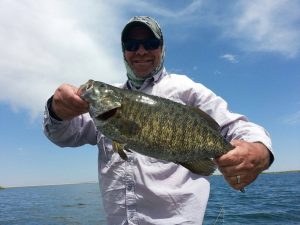
  • Clouser Minnows in chartreuse/white or olive/white, sizes 2–6, for bass and pike
  • Small to Mid Sized poppers and Dahlberg Divers for early and late topwater bass action
  • Crayfish patterns like a Near Nuff Crayfish or a jig-style Meat Whistle in brown or rust
  • Simple carp flies such as a small San Juan Worm, hybrid carp fly, or Thuderball’s
  • Large articulated streamers in black, orange, or white for pike, fished on a wire bite tippet

In a typical year, July and August are a two-fisheries season in Colorado — rivers fishing well early and late, with the middle hours belonging to stillwater and warmwater. This year, with flows running a fraction of normal and heat arriving early, that balance tips even further toward lakes and reservoirs. Whether you’re watching a chironomid indicator twitch at sunrise or stalking a tailing carp across a mud flat at noon, there’s excellent fly fishing to be had all day long — and it’s the kind of fishing that doesn’t ask anything extra of an already stressed river.

Stop by the shop and we’ll help you put together the right flies, lines, and game plan for whatever water you’re headed to this summer.

It’s time to nail down your 2026 fly fishing trip with Minturn Anglers.

About the Author

Justin Nolan

More Articles

Beat the Heat: Tactics for Stillwater and Warmwater fishing this Summer