
Extremely low flows and higher than normal temperatures have taken a toll on the streams and rivers in and around the Vail Valley. There are several closures in place and more on the way if the current weather conditions do not change. The Eagle River is under an all-day closure from Lake Creek in Edwards to the confluence with the Colorado River. The Roaring Fork is closed in the afternoon from the highway 133 bridge in Carbondale down to the confluence with the Colorado River. Warm water holds less oxygen, making it difficult for fish to breathe, especially after the stress of being caught. Even a properly handled fish that appears to swim off in good shape after being caught can still die later. An analogy guides often use is that it is similar to you running a mile and then being told to hold your breath for two minutes as soon as you are done. Trout are also cold blooded, so warm water increases their metabolism and they require more oxygen when less is available in the water. They are extremely sensitive animals and need to be looked after with respect during these low water periods to ensure the health of the fishery as a whole.
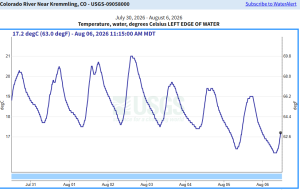
Cool overnight temperatures in the past few days have really helped bring water temps down, especially on Gore Creek and the upper Colorado River. While the upper Colorado has been getting warm in the afternoons, it has not gotten above 68 degrees in the past two days. This means anglers can confidently fish all day, as long as fish are kept wet, handled carefully and released quickly. Flows on the Roaring Fork have gotten a nice boost as water is being released out of Ruedi Reservoir into the Frying Pan. This has helped cool down water temps, as well as increase oxygen levels. The afternoon fishing closure has remained in place on the Fork as water temps are still climbing into the high 60’s in the afternoon.
While this may sound bad, the areas where you can still fish have been excellent. Dry fly fishing on the Gore and upper Eagle has been good, with fish eating terrestrials as well as small mayfly and midge patterns. For nymphs, worms, small perdigons and stoneflies have all been productive. On the Roaring Fork, Drakes, PMDs and caddis are all hatching throughout the day, especially on the upper sections above Basalt. Fishing on the Colorado River has also been good, particularly early in the morning and late in afternoon. Terrestrials, small black mayfly and midge patterns like RS2’s, juju baetis, and rainbow warriors have been the most effective. If you are looking to escape the crowds and are willing to put in a little bit of work, the alpine lakes in the area have been another excellent option. Alpine lakes provide a unique opportunity for anglers to do a majority of fishing by sight, casting to specific fish as they cruise along shelves and around structures close to the bank. The farther you are willing to hike, the more rewarded you are oftentimes because lakes that require a longer hike see less pressure from other anglers. Get out, explore and make sure you are mindful of current conditions where you are fishing so we can protect our local fisheries for years to come.
